In the sprawling world of anime and manga, few series have captured the haunting intersection of gothic elegance, psychological torment, and metaphysical philosophy quite like Rozen Maiden . Created by Peach-Pit, the franchise has seen multiple reboots, anime-original endings, and side stories. However, for many purists, the definitive conclusion lies in the final original manga arc: Gebetgarten (German for Prayer Garden ).
Released between 2008 and 2014 (following a hiatus), Gebetgarten serves as the direct sequel to the 2005 Rozen Maiden (Wechseln and Traumend) manga continuity, diverging entirely from the 2013 anime reboot. It is a dense, emotionally brutal, and ultimately cathartic end to the story of the seven mysterious dolls—living dolls created by the enigmatic alchemist Rozen—who fight for the right to become his perfect girl, Alice. Gebetgarten picks up immediately after the traumatic events of Rozen Maiden (Traumend) . Jun Sakurada—the original "unemployed hikikomori" protagonist—has seemingly resolved his trauma. But peace is an illusion.
Having lost her beloved "medium" (Megu Kakizaki, a terminally ill girl who mirrored Suigintou’s own loneliness), Suigintou descends into a broken, feral state. She realizes that winning the Alice Game will not bring back Megu, nor will it fill the void left by Father (Rozen). In a devastating sequence, she is forced to fight Kanaria (the yellow doll) not out of malice, but out of a desperate need for annihilation.
For fans of the series, Gebetgarten is required reading. It is the final, beautiful, decaying petal of a rose that was never meant to bloom forever.
Experience the power of our AI-powered keyboard. Type Assamese faster than ever, even if you don't know the script!
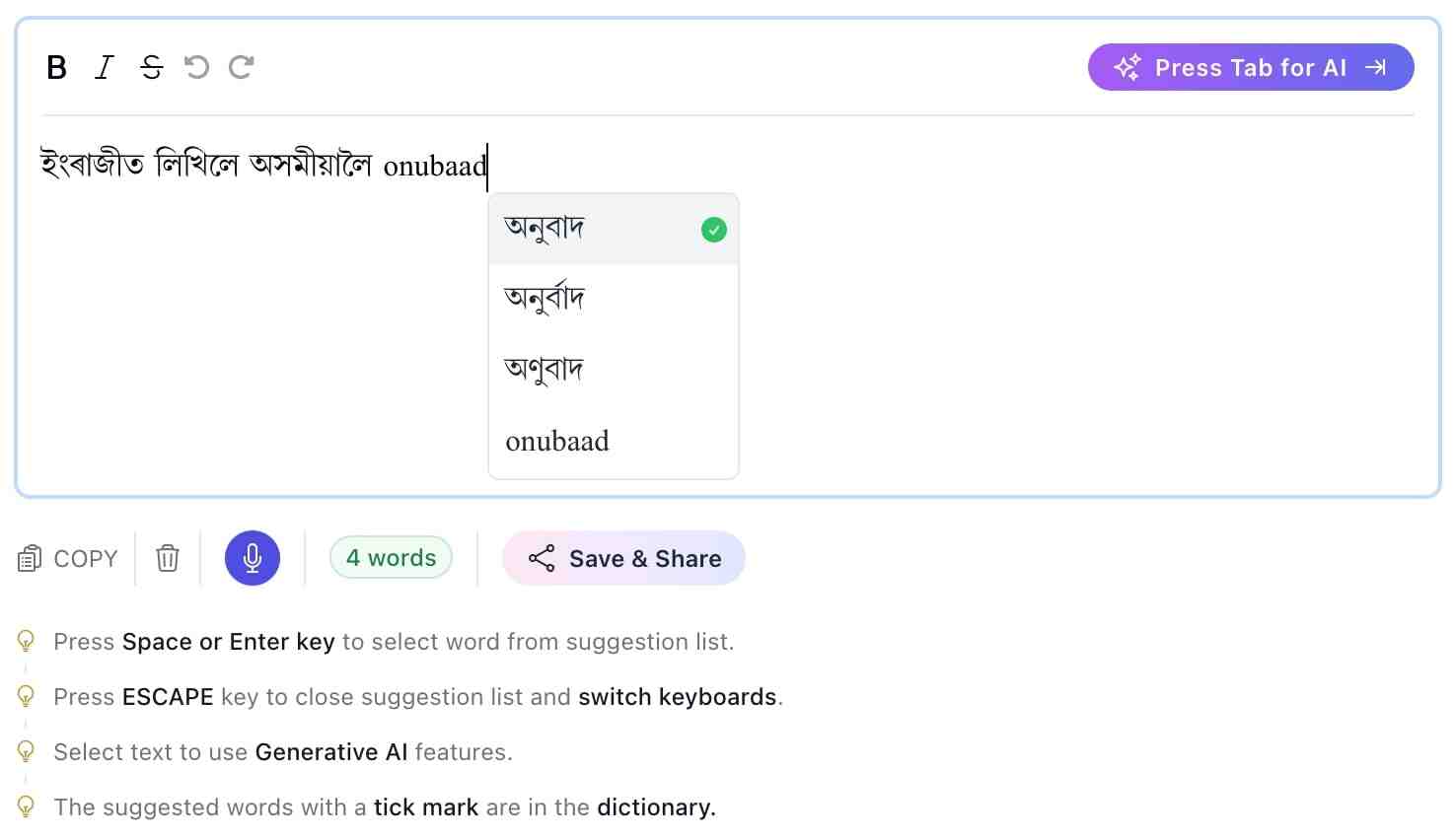
Type Assamese words using English letters and get instant Assamese result.
Get real-time spelling corrections as you type for error-free writing.
Choose from smart AI suggestions to speed up your typing and improve accuracy.
No prior experience needed. Start writing Assamese in minutes!

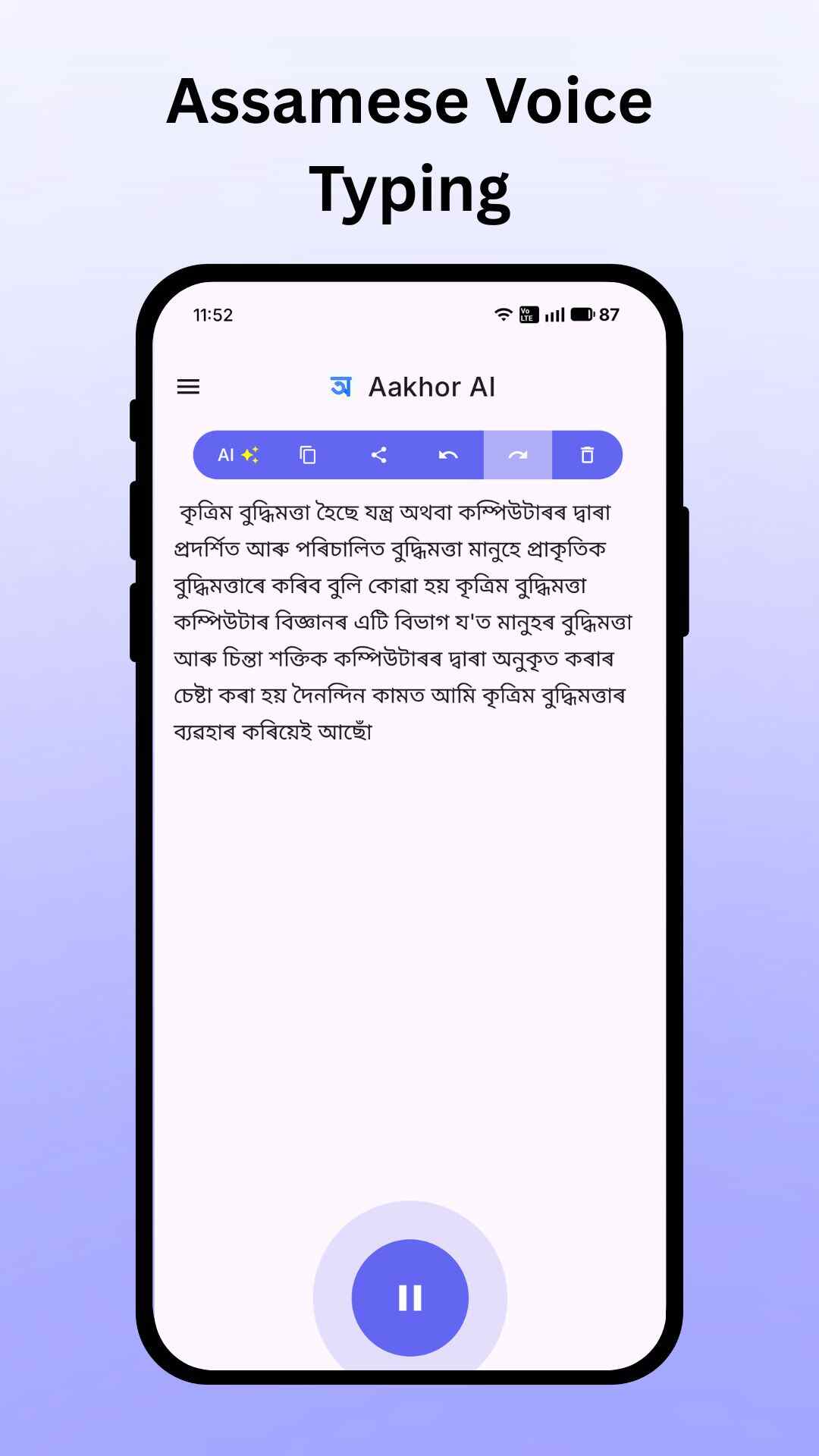
Type Assamese effortlessly by speaking. Our AI voice typing feature converts your speech to Assamese text in real time, making writing faster and more accessible for everyone.
Use Audiorelay mobile app to use your phone as a microphone for desktop
Experience seamless Assamese typing on your phone with our AI-powered mobile app. Enjoy voice typing and smart suggestions for a faster, easier writing experience.
Speak and see Assamese text appear instantly—no typing needed.
Get instant word suggestions as you type for faster, error-free writing.
Get advantage of our all-in-one toolkit
Save important thoughts instantly and access them from anywhere.
Easily share your notes with anyone.
Find word meanings, synonyms, and usage with our smart dictionary.
Utilize the power of our tools right from your browser.
Trained on millions of Assamese words, Aakhor AI lets you write blazing fast, even with zero typing experience.
In the sprawling world of anime and manga, few series have captured the haunting intersection of gothic elegance, psychological torment, and metaphysical philosophy quite like Rozen Maiden . Created by Peach-Pit, the franchise has seen multiple reboots, anime-original endings, and side stories. However, for many purists, the definitive conclusion lies in the final original manga arc: Gebetgarten (German for Prayer Garden ). Rozen Maiden Gebetgarten
Released between 2008 and 2014 (following a hiatus), Gebetgarten serves as the direct sequel to the 2005 Rozen Maiden (Wechseln and Traumend) manga continuity, diverging entirely from the 2013 anime reboot. It is a dense, emotionally brutal, and ultimately cathartic end to the story of the seven mysterious dolls—living dolls created by the enigmatic alchemist Rozen—who fight for the right to become his perfect girl, Alice. Gebetgarten picks up immediately after the traumatic events of Rozen Maiden (Traumend) . Jun Sakurada—the original "unemployed hikikomori" protagonist—has seemingly resolved his trauma. But peace is an illusion. In the sprawling world of anime and manga,
Having lost her beloved "medium" (Megu Kakizaki, a terminally ill girl who mirrored Suigintou’s own loneliness), Suigintou descends into a broken, feral state. She realizes that winning the Alice Game will not bring back Megu, nor will it fill the void left by Father (Rozen). In a devastating sequence, she is forced to fight Kanaria (the yellow doll) not out of malice, but out of a desperate need for annihilation. Released between 2008 and 2014 (following a hiatus),
For fans of the series, Gebetgarten is required reading. It is the final, beautiful, decaying petal of a rose that was never meant to bloom forever.
Contact us for enterprise level solutions
Contact us